Why Interoperability Matters More Than Ever in AEC Workflows
Over the past month at Cityweft, we’ve been focused on a challenge that continues to shape the future of architecture, engineering, and construction workflows: interoperability.
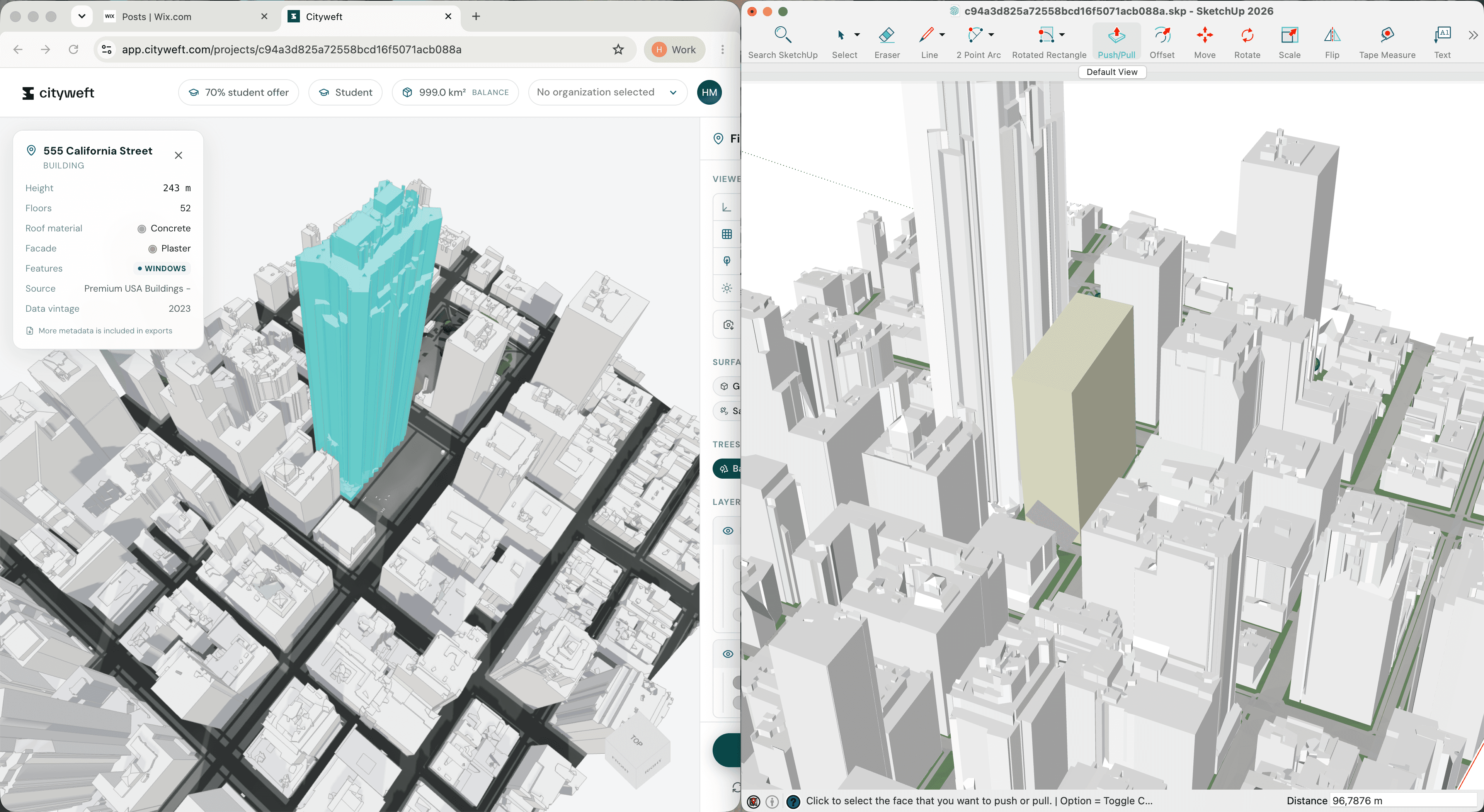
As more AEC teams adopt computational design tools, AI-assisted workflows, and increasingly data-rich design processes, the ability for software systems to communicate effectively has become critical. In practice, interoperability is not just about exporting files successfully. It’s about making site data, environmental analysis, and design intelligence genuinely usable across the tools architects and urban designers already rely on every day.
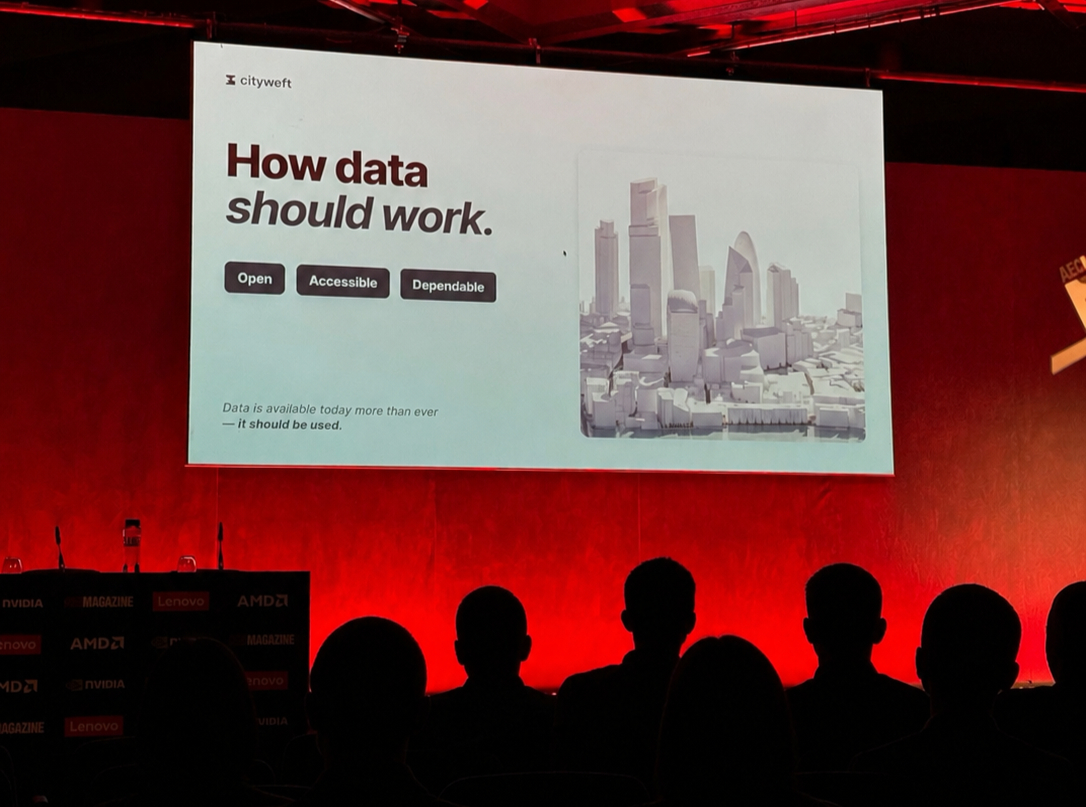
For us, that means improving how Cityweft integrates into existing workflows — whether teams are working in Grasshopper, SketchUp, or other design environments.
Building Workflows That Actually Work
Over recent months, we’ve spent significant time refining plugins, testing exports, and improving workflow reliability across different modelling environments.
The goal is simple: reduce friction.
Many AEC professionals are already managing fragmented workflows across multiple platforms, file formats, and data sources. Adding new tools only creates value if they fit naturally into existing processes.
One theme has consistently emerged in our conversations with architects and urban designers:
People don’t want more complexity — they want tools that work together properly.
That insight has shaped much of our recent development work. Whether it’s improving compatibility with Grasshopper workflows, streamlining exports into SketchUp, or making site data easier to integrate into existing design pipelines, our focus has been on building tools that support the way teams already work, rather than forcing them to rebuild workflows from scratch.
Conversations at NXTBLD
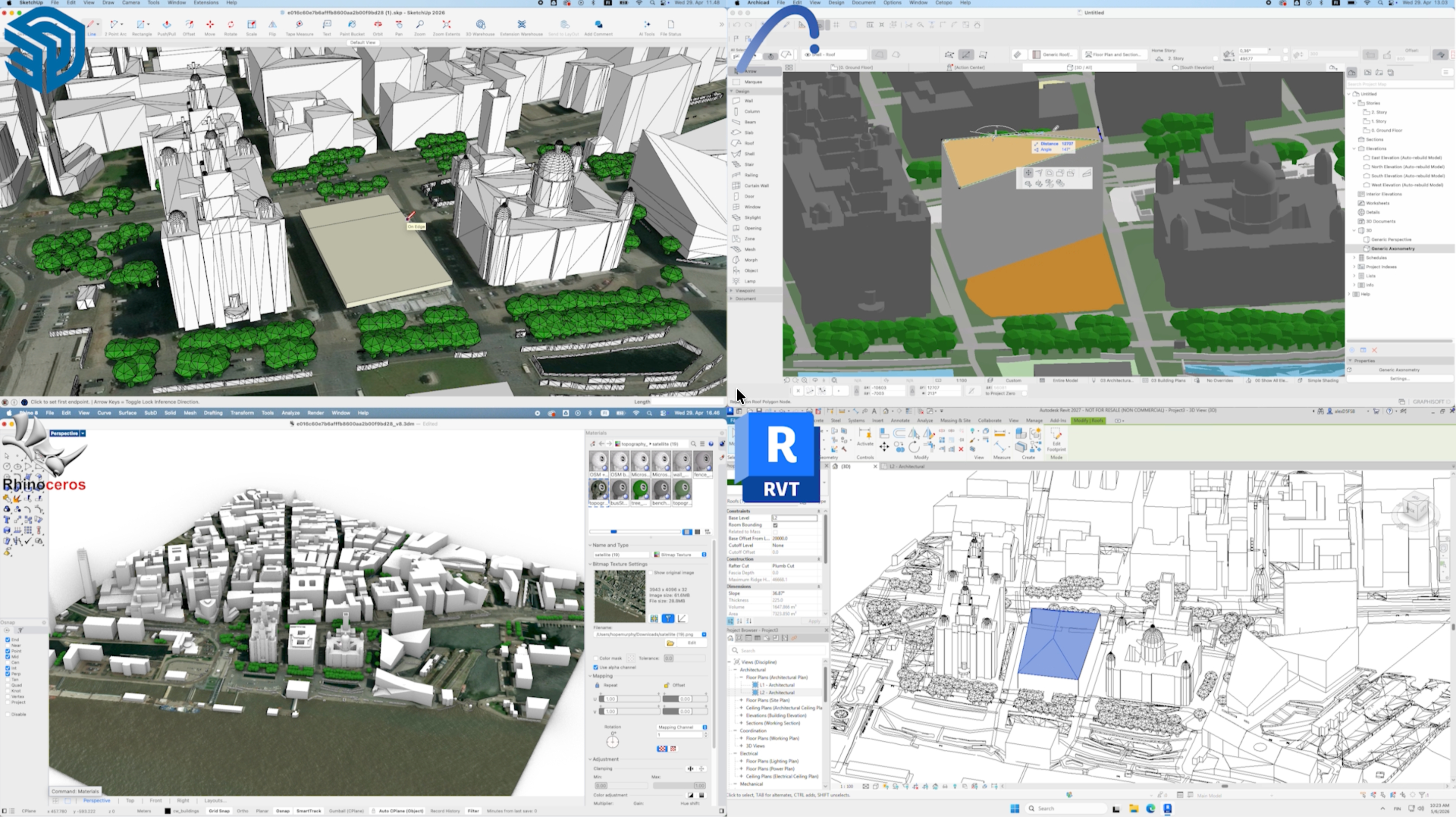
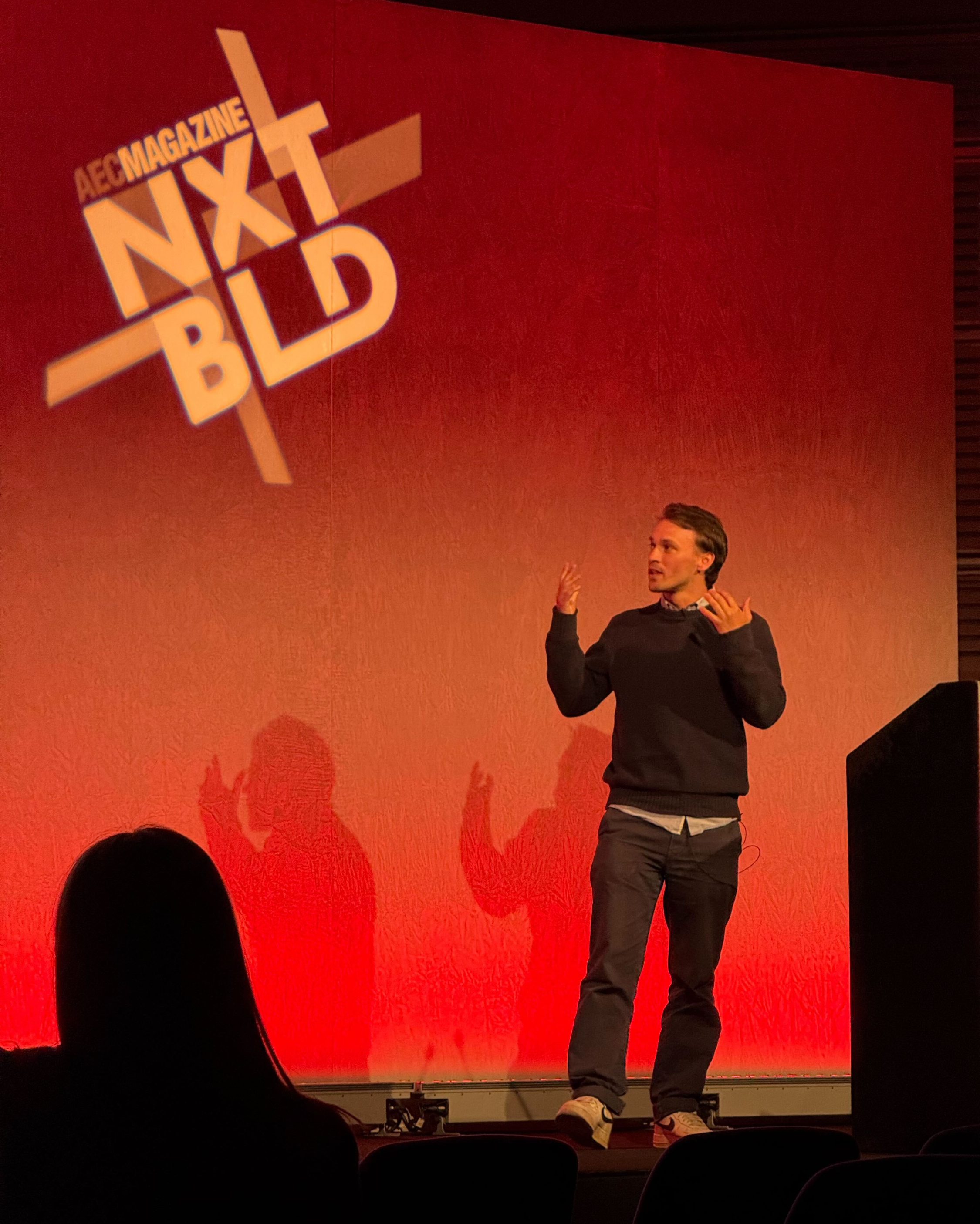
This week, our founders Alexander Groth and Semion Sobolevski travelled to NXTBLD in London to share updates on Cityweft’s latest developments.
Their presentation focused on:
new plugin developments
workflow usability improvements
interoperability challenges in AEC
balancing accuracy and speed in site analysis tools
making environmental and urban data more actionable for design teams
But some of the most valuable insights came from informal conversations throughout the event. Across discussions with architects, urban designers, and AEC professionals, a recurring challenge became clear: firms are actively searching for ways to simplify collaboration across increasingly fragmented toolchains.
While much of the conversation at NXTBLD focused on new AI tools and automation platforms, many teams are still struggling with a more foundational problem — getting existing software, models, and datasets to work together reliably.
AI is rapidly becoming part of the future of AEC, but the industry doesn’t necessarily need more disconnected AI tools. It needs better-connected workflows.
For architects and urban designers, the real challenge is often not generating more information, but making data usable across the systems already embedded in practice. Interoperability only becomes valuable when it helps teams make better decisions earlier, with less friction between tools and collaborators.
Topics like open workflows, AI in architecture, data accessibility, and cross-platform collaboration are no longer future-facing ideas. They are becoming immediate operational concerns for design teams today.
Looking Ahead
As AI adoption accelerates across the AEC industry, interoperability will only become more important.
The future is unlikely to belong to isolated software ecosystems. Instead, firms are increasingly prioritising flexible workflows where tools, models, and datasets can move seamlessly between platforms and teams.
That shift is central to how we’re thinking about Cityweft’s future development.
Alongside these product updates, we’ve also launched a major update to the Cityweft website to better reflect the direction we’re heading as a company and the solutions we’re building for the industry.
We’ll be sharing more reflections from NXTBLD and NXTDEV in the coming weeks.